
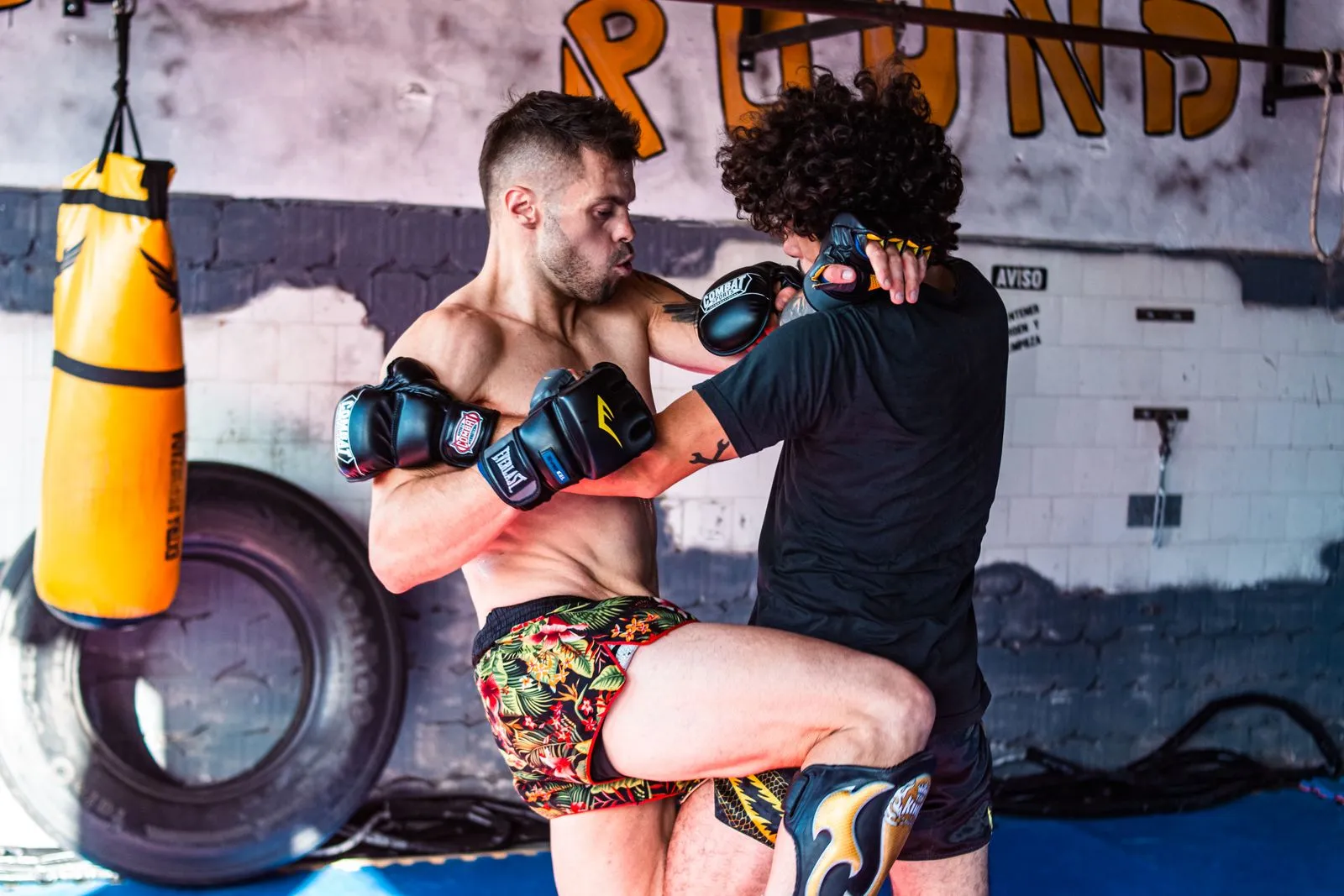
The right gloves and hand wraps make training more comfortable and help protect your hands during bag work, pad rounds, and partner drills. For a new student, the range of sizes and designs can make choosing gear feel more complicated than it needs to be. Start with fit, support, and the type of training you expect to do. A well-chosen pair should feel secure without restricting your fingers or circulation, while wraps should stabilize your wrist and knuckles beneath the glove.
Choose the Right Glove Weight
Muay Thai gloves are commonly labeled by weight in ounces, such as 12, 14, or 16 oz. The right option depends on your body size, the training activity, and your gym’s rules. Heavier gloves provide more padding and are often used for partner drills, while lighter pairs may suit bag or pad work. Before buying, ask your instructor which weight they recommend for your classes and whether you need a separate pair for sparring.
A glove’s ounce rating describes its weight, not a precise measurement of how it will fit your hand. Padding and construction vary by brand, so two gloves with the same label can feel different. If possible, try them on with your usual wraps. Your fingers should reach the end of the glove without being crushed, and the glove should close securely around your wrist.
Check Fit and Wrist Support
A good fit feels snug and stable, not painfully tight. With your hand wrapped, make a fist inside the glove. Your knuckles should sit against the padded striking area, and your thumb should rest naturally without being forced sideways. If your fingertips are sharply pressed into the glove or your hand shifts inside when you move, try another size or shape.
Look for a wrist closure that holds the glove in place and is easy to fasten securely. A wide hook-and-loop strap can provide a stable feel and is practical for regular classes. The glove should support your wrist without cutting into it or limiting comfortable movement. Ask your coach to check the fit before using new gloves for hard rounds.
Select Hand Wraps That Work
Hand wraps help hold the wrist and knuckles in position and reduce rubbing inside the glove. Most beginners do well with washable fabric wraps long enough to cover the knuckles, pass around the wrist, and secure the thumb. Longer wraps offer more material for coverage, but they need careful application so they do not bunch inside the glove.
Wraps should feel supportive without making your fingers tingle, change color, or feel cold. Keep your fingers relaxed while wrapping, then make a fist to check that you can close your hand comfortably. Practice the same wrapping method before each session, or ask an instructor to demonstrate a reliable technique. A correctly fitted glove cannot make up for a wrap that is too tight or loose.
Care for Your Training Gear
After class, remove your wraps and let both wraps and gloves air out in a well-ventilated place. Do not leave damp gear sealed in a gym bag. Wash wraps regularly according to their care label, and allow them to dry fully before rolling them for storage. Wiping glove interiors with a clean cloth can help remove sweat, but avoid soaking the padding.
Inspect your equipment as you use it. Replace wraps that have lost their stretch or developed frayed closures. Check gloves for torn seams, loose wrist straps, compressed padding, or a fit that no longer feels secure. If you are unsure whether gear is suitable for a particular drill, check with your coach before training with it.
Choose gear that fits over your wraps, supports your wrists, and matches your gym’s training requirements. Try gloves on before committing when you can, and learn a consistent wrapping method from an instructor. With those basics in place, you can focus on learning technique. Ask your Muay Thai school for a fit check or equipment guidance before your first class.